Muscle cards with origin, insertion, action and innervation
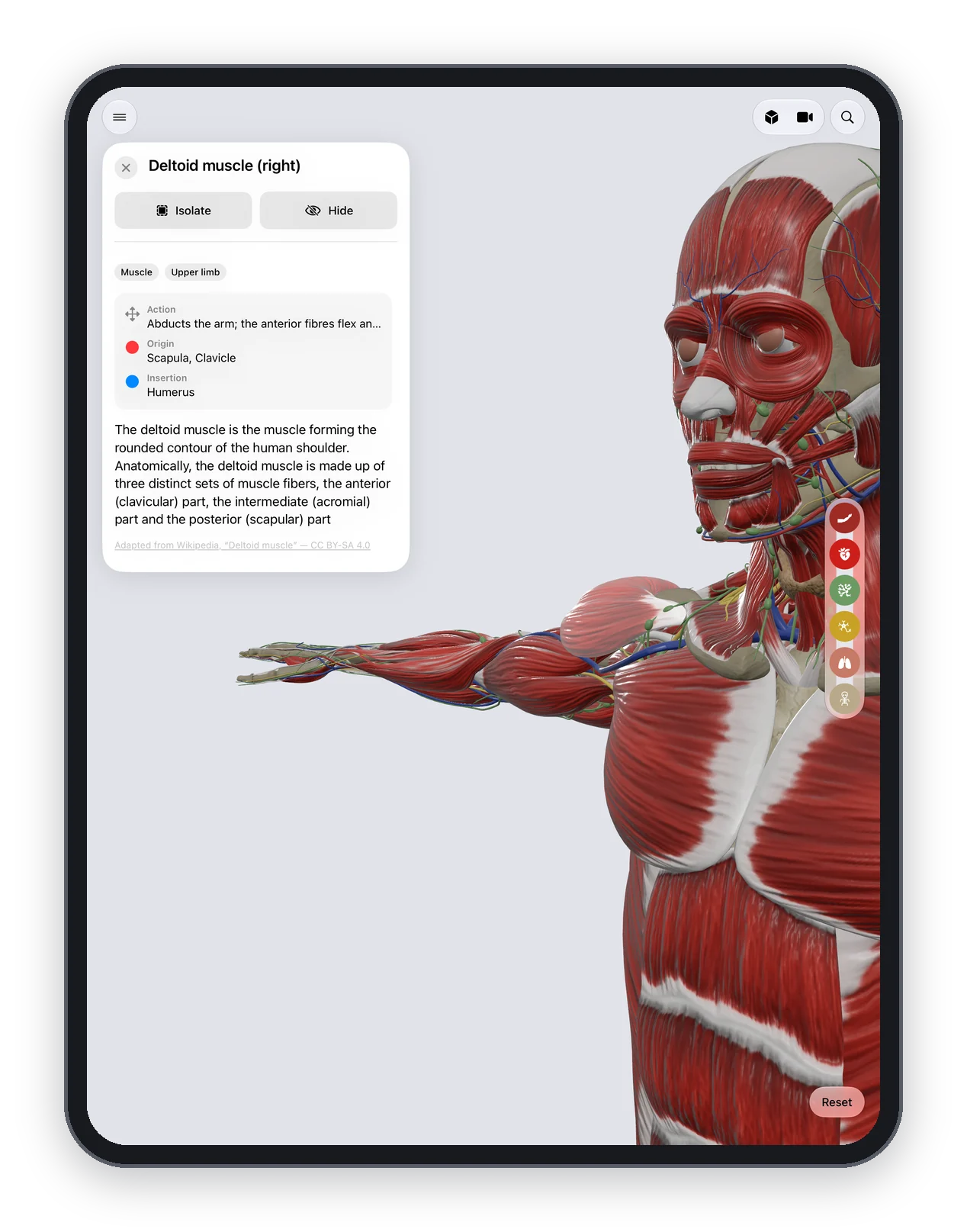
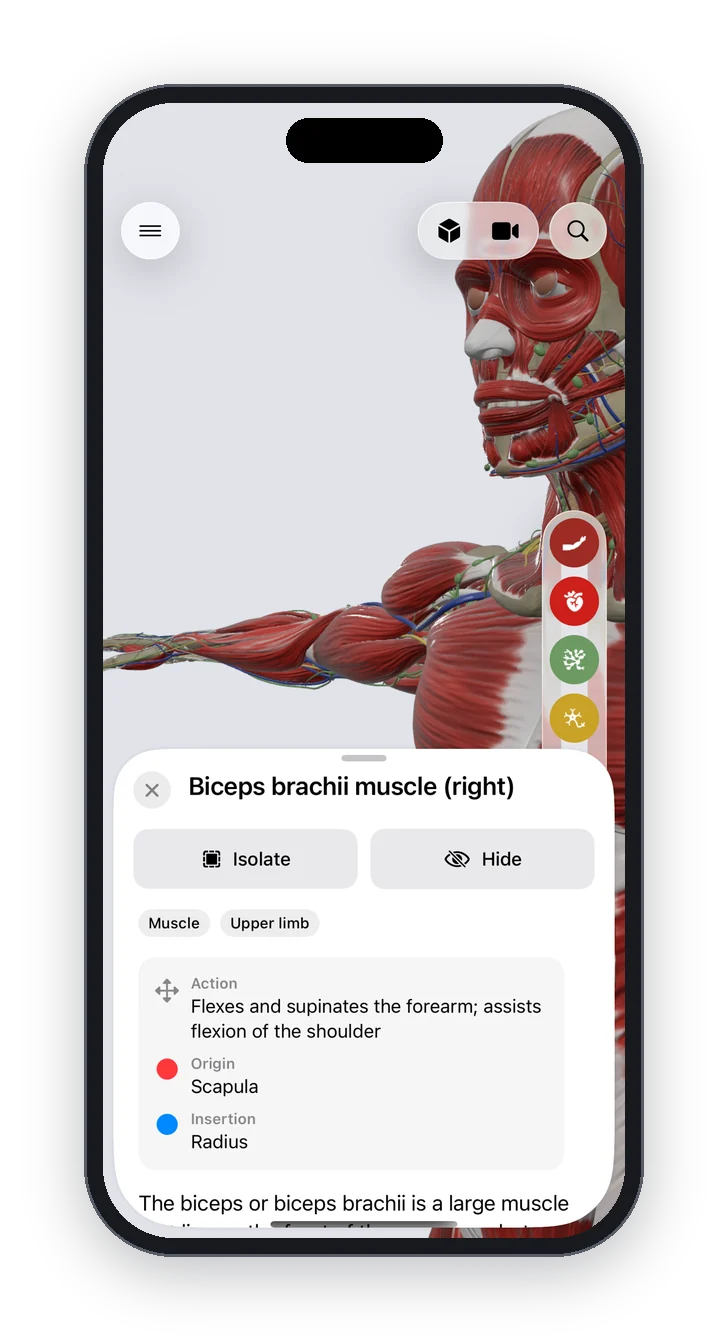
Tap any muscle in Anatomy Atlas 3D to see its action, its origin and insertion bones (marked red and blue) and, for the major muscles, its innervation.
Origin, insertion, action, innervation: for most anatomy exams, that's what you need to know about every muscle. In Anatomy Atlas 3D, it's all on the muscle's card, one tap away.
What a muscle card shows
- Name in English and Latin (Terminologia Anatomica 2)
- Action: what the muscle does, in plain words
- Origin and insertion: the bones it attaches to
- Innervation: the nerve that supplies it, for the major muscles
- A short definition
From the card to the body
The origin and insertion are color-coded on the card, origin in red and insertion in blue, and the muscle stays highlighted on the 3D body while the rest of it dims. Rotate around it to see which bone it pulls towards which: that's what explains its action. Start with a muscle like the biceps brachii or the deltoid.
Frequently asked questions
How many muscles have cards?
All the muscles in the atlas have a card. Action, origin and insertion are shown for the muscles where that data applies, which covers the muscles students are asked about most.
Are origins and insertions color-coded?
Yes. On the card, the origin is marked in red and the insertion in blue.
Can I study muscles by region?
Yes. Choose a region (head, neck, thorax, abdomen, pelvis, upper limb or lower limb) to focus on its muscles.