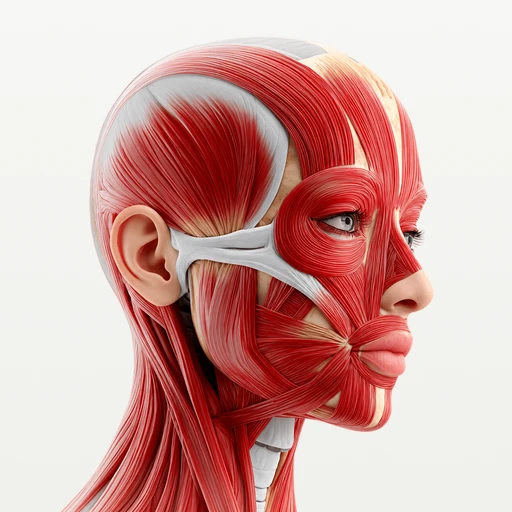
Six anatomy layers you can peel in one swipe
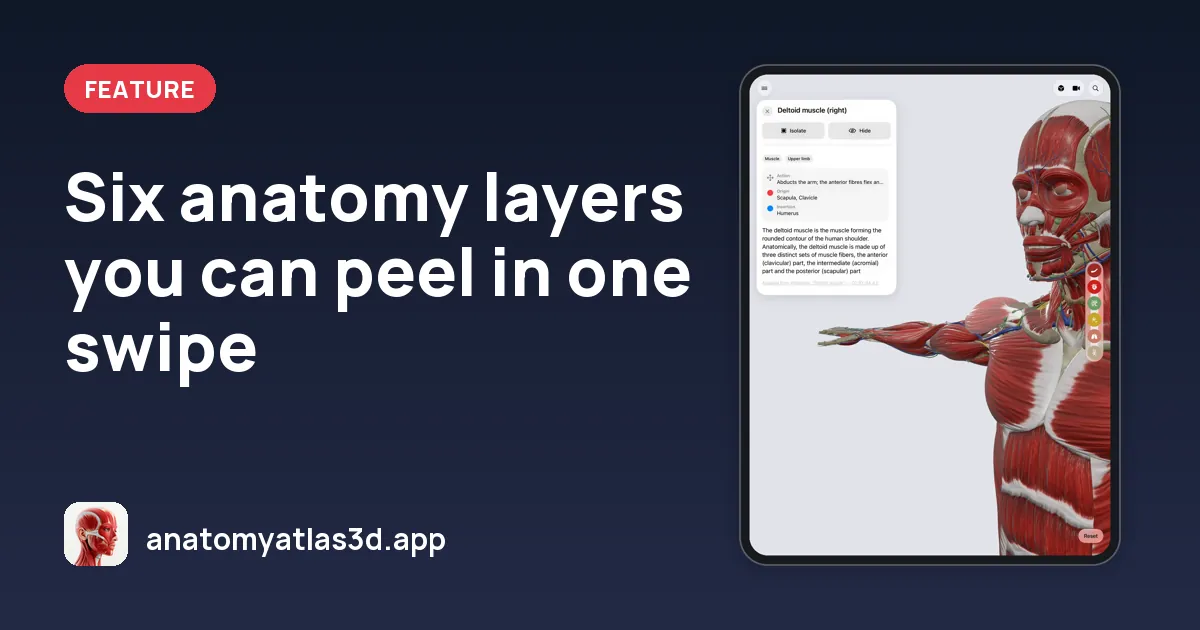
Anatomy Atlas 3D shows the body in six layers, from the superficial muscles down to the skeleton. Tap a layer to hide it, or swipe down the layer rail to peel the body in one gesture.
Anatomy is a story of layers: skin over fascia, muscles over muscles, vessels and nerves running between them, organs inside cavities, the skeleton holding it all. Anatomy Atlas 3D lets you take that story apart in the order it's built.


The six layers
| Layer | What it shows |
|---|---|
| Muscles | Superficial and deep skeletal muscles, with tendons |
| Heart and vessels | The heart, arteries and veins |
| Lymphatics | Lymph nodes and lymphatic vessels |
| Nerves and senses | Nerves, plus the eye and ear |
| Organs | Thoracic, abdominal and pelvic organs, brain and glands |
| Skeleton | Bones, joints, cartilages and ligaments |
How to use them
- Tap a layer on the rail on the right to show or hide it.
- Swipe down the rail to peel the layers you pass over, one after the other, as if dissecting from the surface inwards. Swipe back up to restore them.
- Selections stay visible. If you selected a structure, it stays on screen even when you hide its layer, so you can see a muscle against the bare skeleton.
Why layers matter when you study
Most exam questions are about relationships: what lies deep to the trapezius, which nerve runs between two muscles, where an artery crosses a bone. Peeling layers turns those relationships into something you can see from any angle instead of memorising a list.
Frequently asked questions
Can I see only the bones and one muscle?
Yes. Select the muscle, then hide the muscle layer: the selected muscle stays visible on the skeleton. You can also use Isolate to show it alone.
Are deep muscles included?
Yes. Hiding or peeling the superficial structures reveals the deeper ones underneath.
Does the female body have the same layers?
Yes. Both bodies have the same six layers.